

Glaucoma Evaluation & Treatment in Anchorage

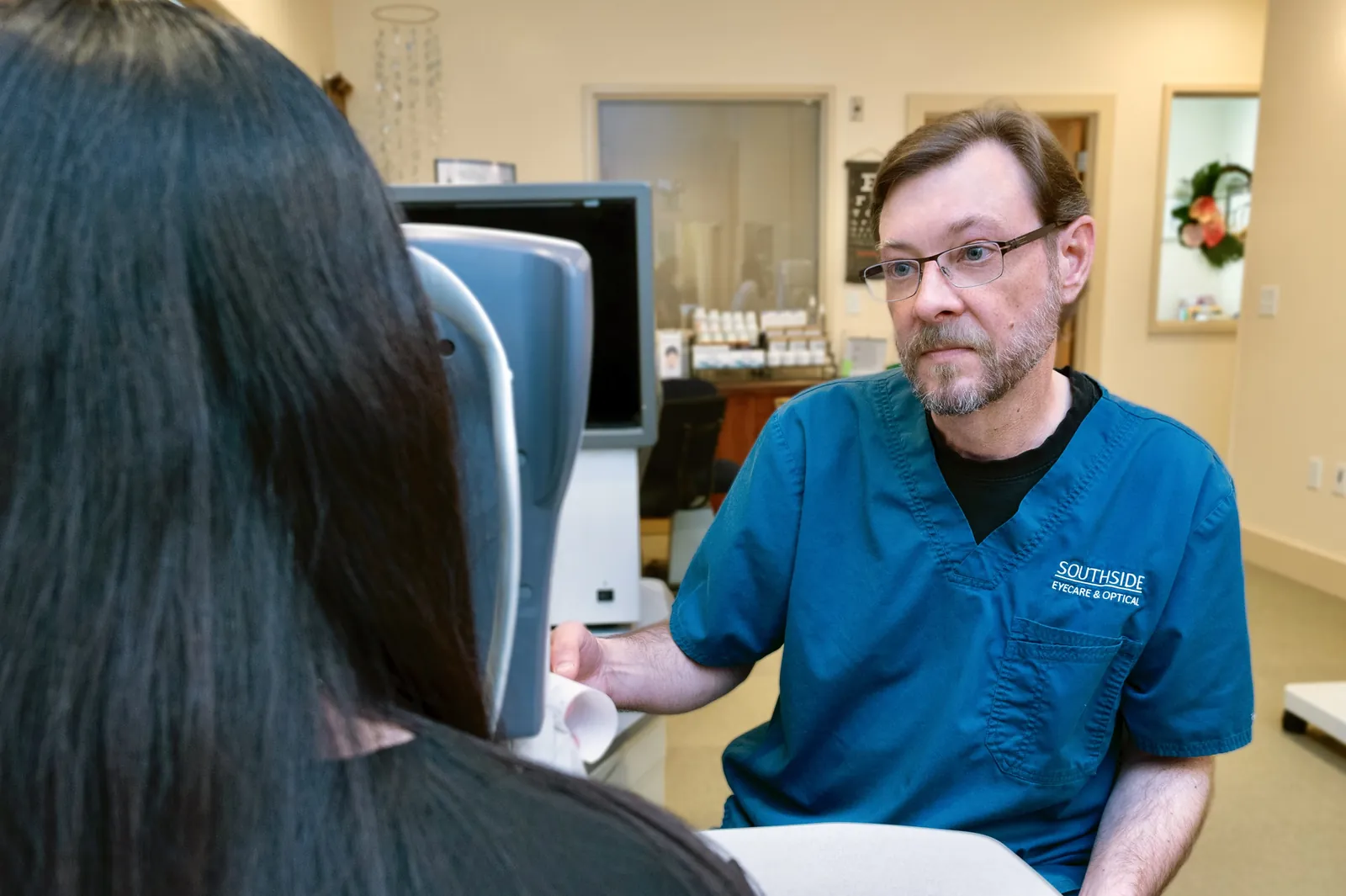
Southside technician running pre-exam eye tests with a patient

Protecting Your Sight From Glaucoma

Glaucoma damages the optic nerve, usually without pain or early warning signs. By the time most people notice a change, some vision is already gone for good. Regular testing is how we catch it early. At Southside Eyecare & Optical, Dr. Jacquelyn Lamigo and Dr. Christie Stemmle test for glaucoma, monitor it over time, and treat it, including with in-office laser treatment.

What is glaucoma?

Glaucoma is a group of eye diseases that damage the optic nerve, the connection between your eye and your brain. Without treatment it can cause permanent vision loss. At Southside Eyecare & Optical in Anchorage, Dr. Lamigo and Dr. Stemmle evaluate and manage glaucoma, and both are Alaska Board certified to perform glaucoma laser procedures, including SLT (selective laser trabeculoplasty) and LPI (laser peripheral iridotomy).

Testing and Treatment Under One Roof

Dr. Lamigo and Dr. Stemmle are Alaska Board certified to perform SLT and LPI glaucoma laser procedures, and they do them right here in our office. We also have the tools to find glaucoma and follow it closely: OCT imaging of the optic nerve, Humphrey visual field testing, and Optos retinal imaging. That means testing, monitoring, and laser treatment all happen with doctors who already know your eyes.

Who Is at Risk for Glaucoma?

Anyone can develop glaucoma, but some people are more likely to. Risk factors include:

- Higher than normal eye pressure

- A family history of glaucoma, especially in a parent or sibling

- Age, with risk rising after 40

- A thinner than average cornea or a narrow drainage angle inside the eye

- African, Hispanic, or Asian ancestry, depending on the type of glaucoma

- Diabetes, high blood pressure, or long-term steroid use

How We Test for Glaucoma

Eye pressure alone doesn't tell the whole story. Some people develop glaucoma with normal pressure, and some people with high pressure never do. A full glaucoma evaluation looks at several things together:

- Eye pressure measurement

- A dilated look at the optic nerve

- OCT imaging, which measures the nerve fiber layer in fine detail

- Humphrey visual field testing, which checks your side vision

- Corneal thickness, which affects how pressure readings are read

If you are diagnosed, we repeat these tests over time to see whether anything is changing.

Glaucoma Treatment

Vision lost to glaucoma can't be brought back, but treatment can slow or stop further damage. The goal is to bring eye pressure down to a safe level for your eyes.

Prescription eye drops are often the first step. SLT (selective laser trabeculoplasty) is a quick in-office laser treatment that helps fluid drain from the eye, and it may reduce or replace the need for drops. LPI (laser peripheral iridotomy) makes a tiny opening in the iris to help fluid flow when the drainage angle is narrow or closed. If your glaucoma needs surgery, we refer you to a glaucoma surgeon.

To learn more, visit glaucoma.org.

Glaucoma Questions

Can glaucoma be cured?

No. Vision lost to glaucoma can't be restored, but treatment can slow or stop further loss. That is why catching it early matters so much.

How often should I be checked for glaucoma?

Adults over 40, and anyone with risk factors such as a family history or high eye pressure, should be checked at least once a year. If you already have glaucoma, your doctor will set a follow-up schedule based on your results.

Does insurance cover glaucoma testing?

Glaucoma testing and treatment are medical care, so they are usually billed to your medical insurance, such as Medicare, Medicaid, Premera Blue Cross, Moda Health, or TriWest. Our front desk can check your coverage before your visit.

Schedule a Glaucoma Evaluation

Call 907-561-1167 or request an appointment online.